Quick answer
Reverse osmosis uses water pressure to push water through a very fine membrane. Water molecules pass through; most dissolved solids, metals and other contaminants are held back and rinsed down the drain.
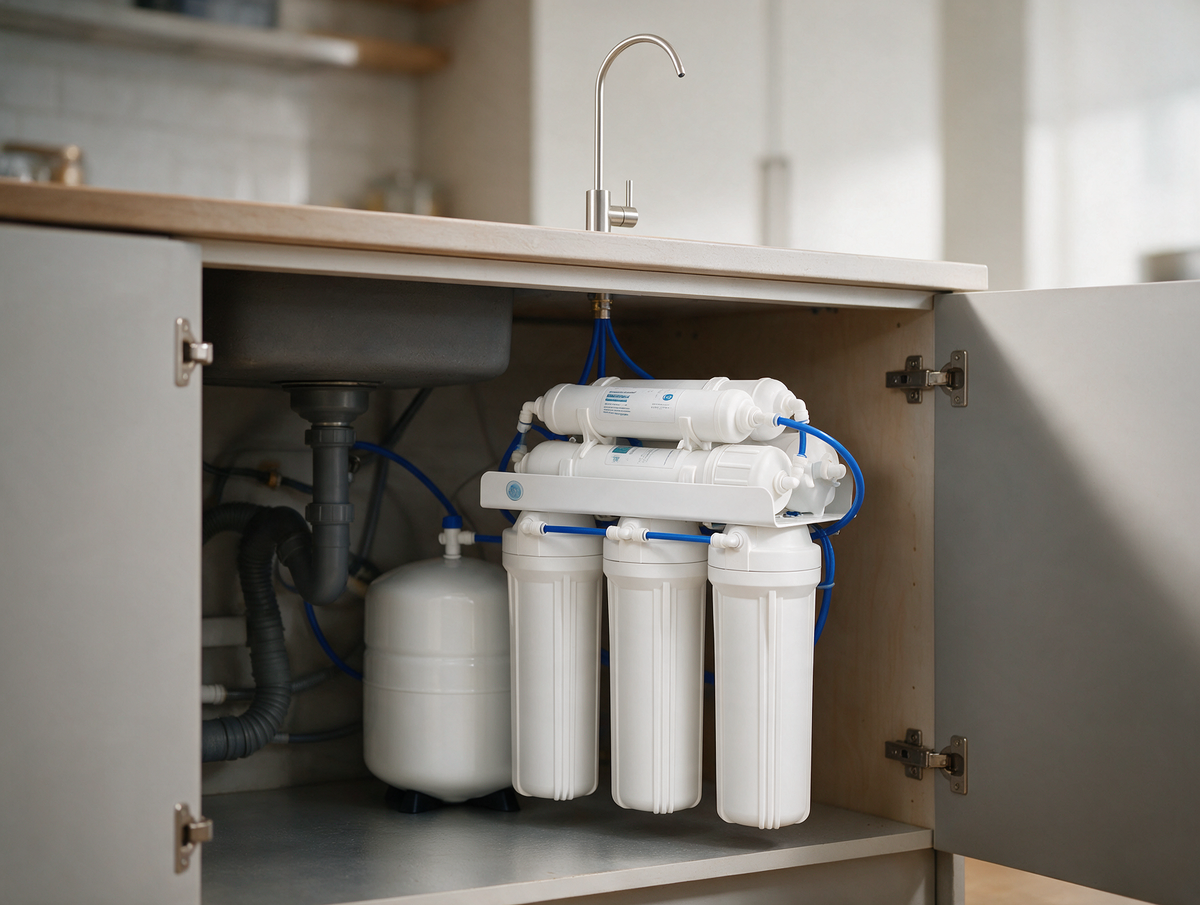
- Home RO systems pair the membrane with pre-filters and post-filters, usually in 4 or more stages.
- RO needs a drain line for the rejected water.
- It comes in countertop, under-sink and water cooler versions.
Reverse osmosis, or RO, is one of the most effective ways to clean up drinking water at home or in the office. It is also one of the most misunderstood. Here is what actually happens inside an RO system, in plain language.
Osmosis, then reverse osmosis
Osmosis is a natural process: when two solutions are separated by a semipermeable membrane, water moves from the less concentrated side to the more concentrated side. Reverse osmosis flips that. By applying pressure to the concentrated side, water is forced the other way, through the membrane, leaving the dissolved solids behind.
The Water Quality Association describes RO as a process where water and contaminants are separated by passing through a thin semipermeable membrane, with pressure forcing water through and leaving contaminants behind (WQA, Reverse Osmosis Fact Sheet).
What happens in each stage
A home RO system is more than a membrane. A typical 4-stage system works like this:
- Sediment pre-filter catches sand, rust and grit that would clog the membrane.
- Carbon pre-filter reduces chlorine, which can damage RO membranes, and improves taste and odor.
- RO membrane separates the water from most dissolved solids. Rejected water flows to the drain.
- Post-filter polishes the taste before the water reaches your glass.
Exact stages vary by model, so check the product page for the filters in your system. Avalon's A61-RO and A62-RO use 4-stage RO and add UV, and both display a TDS reading so you can see the result.
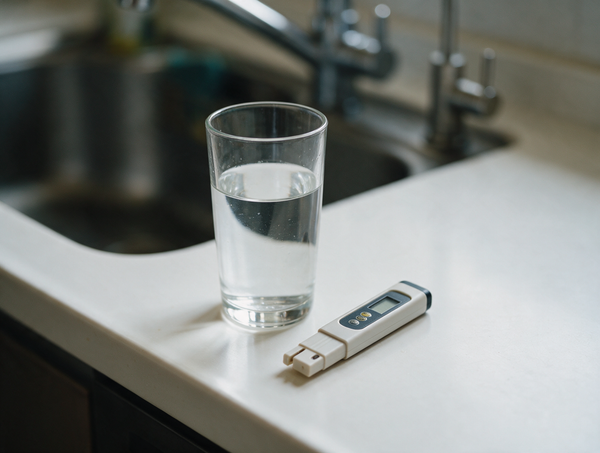
Pro tipTest your water with a TDS meter before and after an RO system. The drop in the reading is a quick way to see the membrane working. Learn more in What is TDS in water?
What RO removes, and what it leaves
RO removes most dissolved solids. The WQA notes RO can remove most organics, metals and nitrate, and is often combined with activated carbon and UV for a multi-barrier approach. The EPA lists reverse osmosis among the treatments effective for removing total dissolved solids and chloride (EPA).
RO also removes most of the minerals in water, like calcium and magnesium. That is why RO water tastes clean and a little flat compared with tap water.
Check the certificationsNo single filter removes everything. If you are treating a specific contaminant, check that the system is tested and certified for it.
Why RO needs a drain
The membrane does not trap contaminants the way a sponge would. Instead, a stream of water constantly rinses the rejected solids off the membrane and carries them to the drain. That keeps the membrane working, but it means every RO system needs a drain line, usually connected under the sink.
Countertop, under-sink or RO water cooler

| Type | Where it goes | How you pour | Best for |
|---|---|---|---|
| Countertop RO (A61-RO) | On the counter | Touch button on the unit | Renters, quick setup |
| Under-sink RO (A62-RO) | In the sink cabinet | Its own faucet | A clear counter |
| RO water cooler (A5-RO) | On the floor | Hot, cold and room temp taps | Offices and break rooms |
Avalon rates the A61-RO and A62-RO for up to 100 gallons per day and feed pressure of about 14.5 to 58 psi, and says no technician is required. Filters last about 6 months or 1,500 gallons.
Not sure your sink has room or a drain connection? We can help you check before you order.
Get expert helpOur RO picks
Prices are live from our store.

Avalon A62-RO Under-Sink Reverse Osmosis System with Faucet, 4-Stage
4-stage RO that hides in the sink cabinet and pours from its own faucet, with a TDS display and UV.
View details
Avalon A61-RO Countertop Reverse Osmosis System, 4-Stage with TDS Display
4-stage RO that sits on the counter and dispenses at the touch of a button. A good fit for renters.
View details
Avalon Reverse Osmosis Replacement Filter Set, 4-Stage
The 4-stage RO filter set for Avalon RO systems. Keep one on hand for the next change.
View detailsSee all reverse osmosis systems or our bottleless water coolers, including the A5-RO.